Customer success software that sees every ticket.
Health scores, renewals, success plans and playbooks, built on the same accounts your support team works every day. When a customer has a bad week of tickets, their health score knows that day, not at the next sync.
14 days free, then $49 per user per month, everything included. View-only users are free.
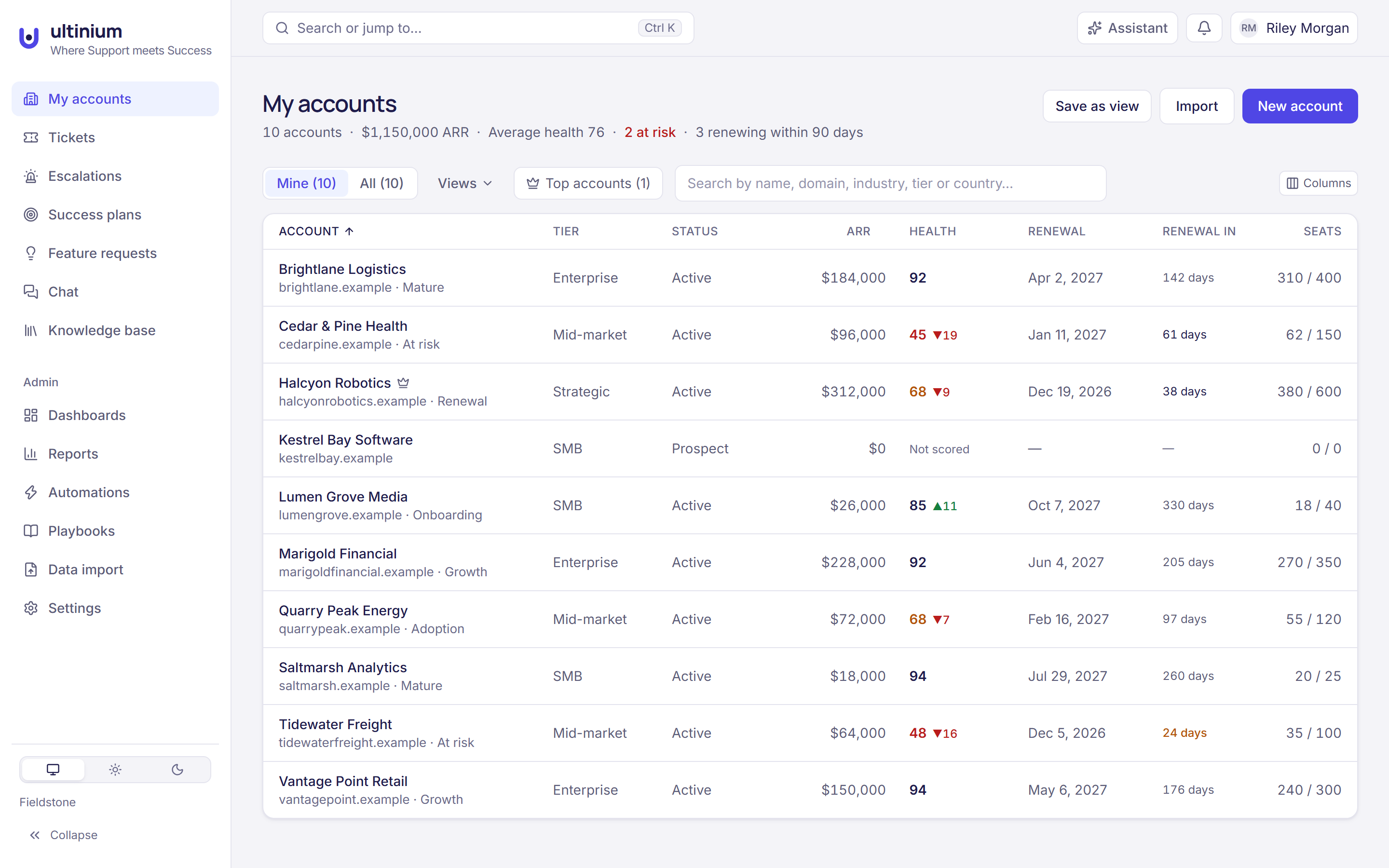
Know which customers need you today.
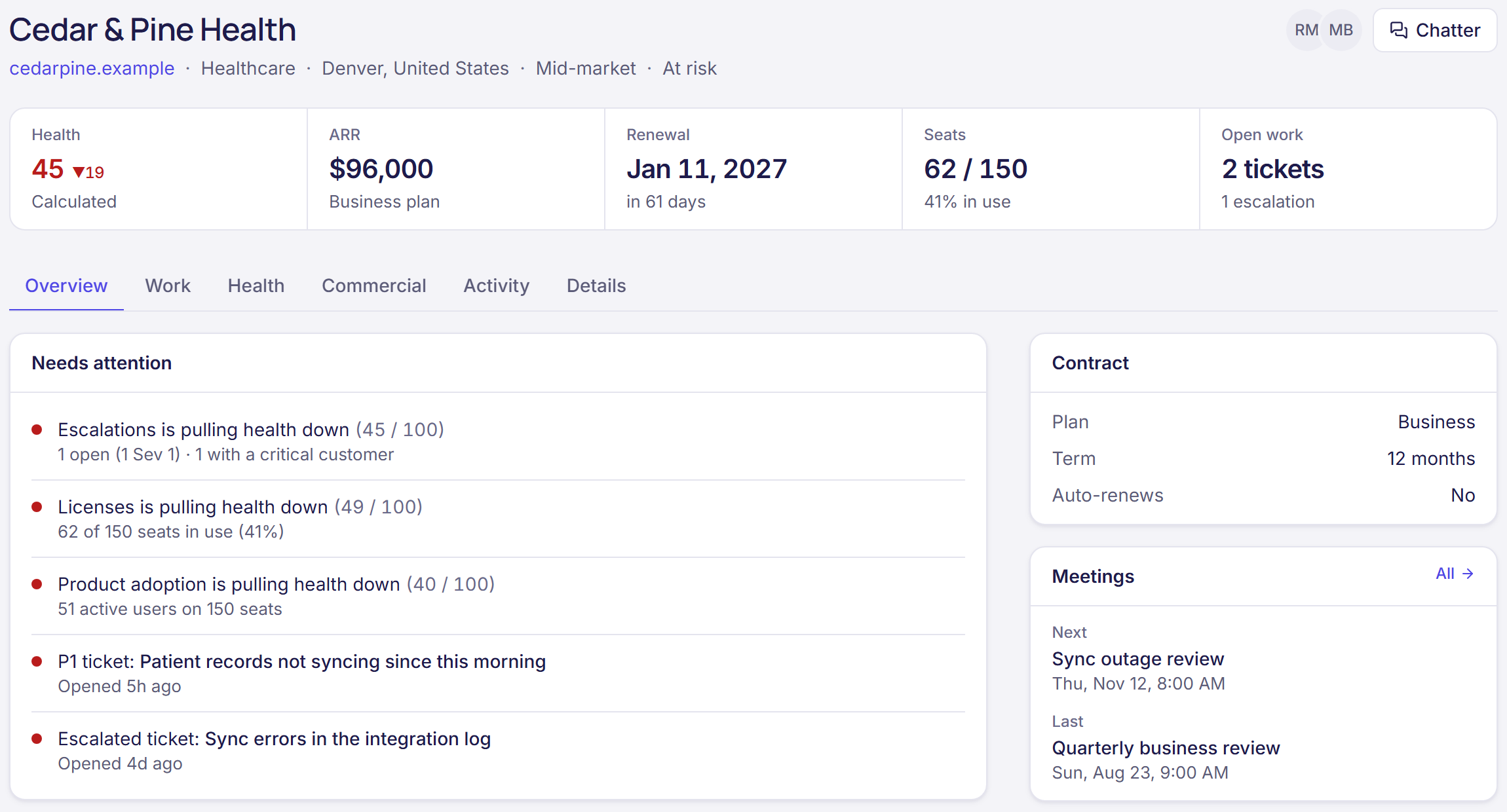
Every account gets a score from ten weighted parts, recalculated as things change, with a trend and the reasons behind it. You see what is pulling an account down before you open a ticket or a usage report.
- Licenses, adoption, usage trend, reliability, support load, escalations, satisfaction, engagement, success plans and your team’s read
- Weights you set, a preview before you save, and overrides with a reason and an end date
- A trend for every account and a change over 30 days in every list
- Alerts when a customer runs over their seats or uses fewer than half
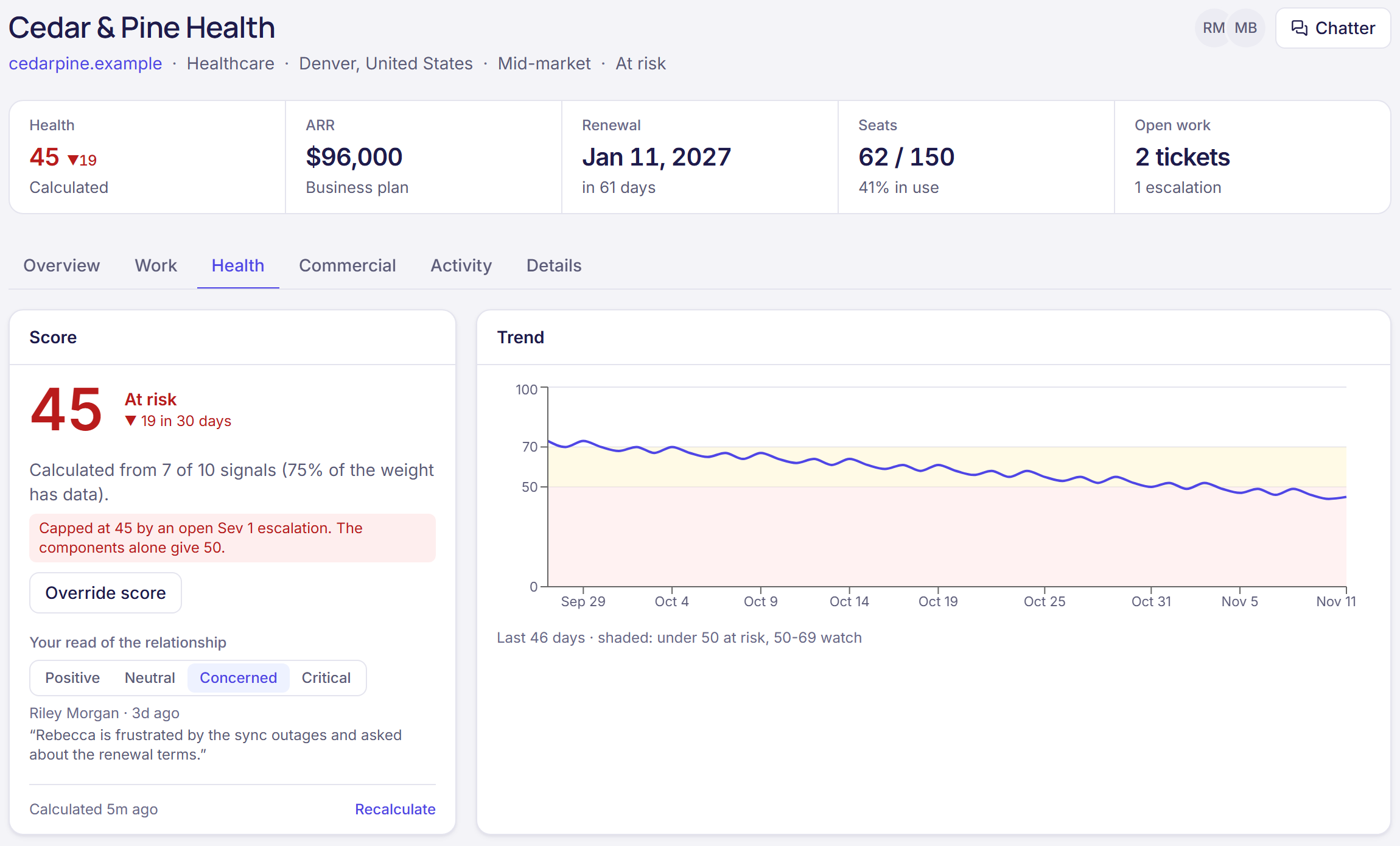
Every account, with what needs attention first.
Open an account and its overview tells you what needs you: a falling score and why, a P1 ticket, an escalation, a late success plan task. Then the contract, the next meeting, the people on both sides and everything that happened.
- Key facts at a glance: health, ARR, renewal, seats in use and open work
- Tickets, escalations, success plans, meetings, emails, licenses and hours on one page
- Your account team with CSM, TAM and AE roles, and the customer’s champion and sponsor
- Custom fields for whatever else you track
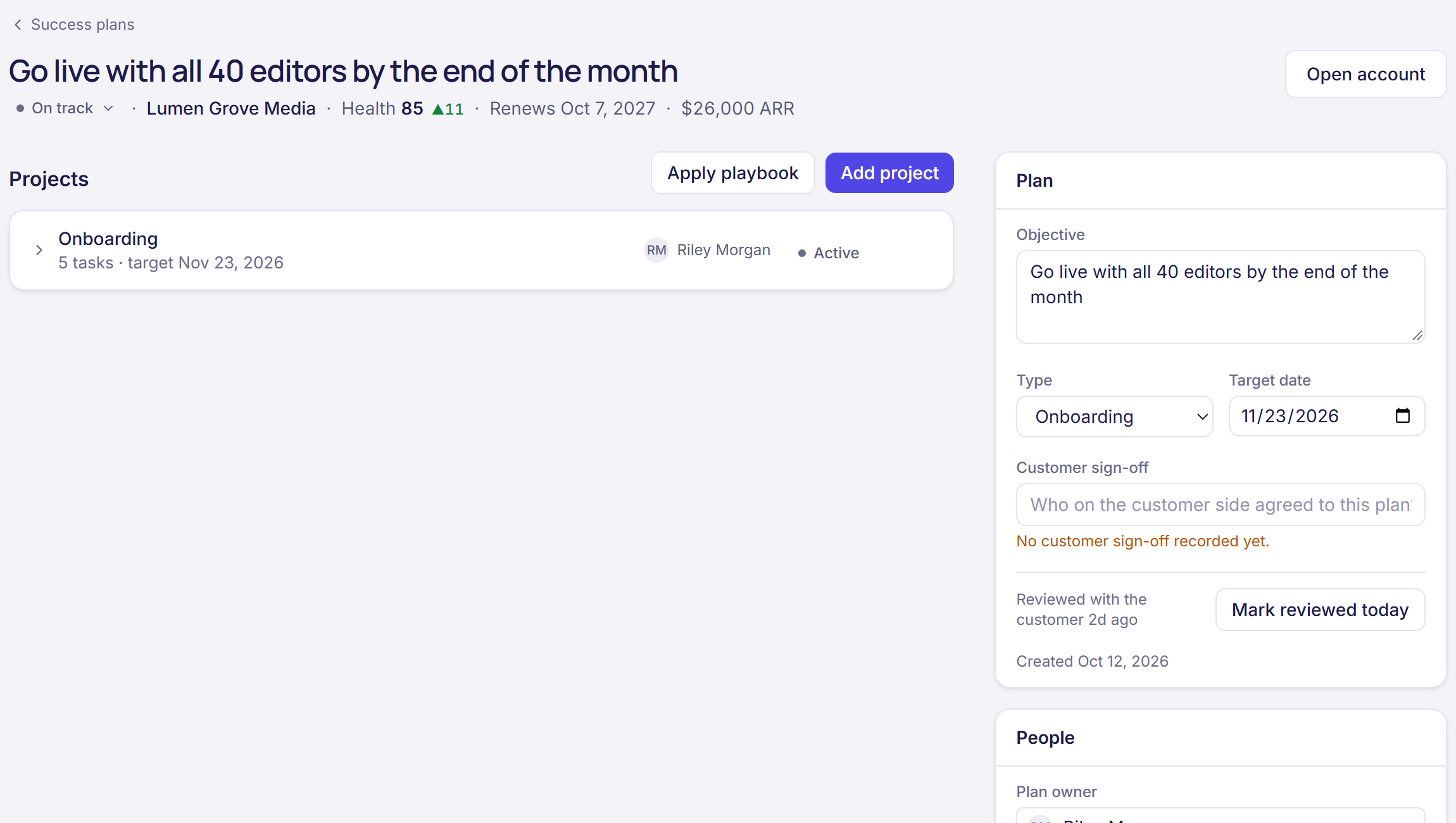
Plans your customer agreed to, and the work to get there.
A success plan holds the customer’s goal, a target date and their sign-off, with projects and tasks underneath. Playbooks make the work you repeat a one-click task list, and automations keep it moving without anyone remembering to.
- Success plans with projects, tasks and subtasks, owners, due dates and time logged
- 16 ready-made playbooks, such as onboarding and renewal, or build your own
- 46 automation templates, run on events or on a schedule, including the handoff when a deal is won
- Reviews with the customer tracked, so no plan goes quiet
Renewals, reports and the rest
Renewals
Days to renewal on every account, with what’s due in the next 90 days and who owns it.
Meetings
Customer meetings from Google Calendar land on the right account and count toward engagement.
Reports and dashboards
52 ready-made reports, a report builder, dashboards, and reports emailed on a schedule.
Product usage
Mixpanel, Segment, an API key or a CSV: adoption and the usage trend count toward health.
Feature requests
Log what each customer asks for with the ARR behind it, and send it to Jira.
The assistant
Ask about any account or renewal in plain words, and have it draft the follow-up.
Questions
What is customer success software?
Customer success software helps the team after the sale keep customers healthy, renewing and growing: a view of every account, a health score that warns you early, renewals, success plans, and the playbooks that make it repeatable. Ultinium does all of that, and because your help desk is in the same place, the health score sees support problems as they happen.
How is the health score worked out?
From ten weighted parts: licenses in use, product adoption, the usage trend, product reliability, support load, escalations, satisfaction, engagement, success plans and your team’s read of the relationship. You set the weights. Parts with no data are left out rather than counted against an account, an open Sev 1 escalation caps the score, and anyone allowed can override it with a reason and an end date.
Where does product usage come from?
Connect Mixpanel or Segment, send it with an API key, or upload a CSV. Active users and other measures count toward adoption and the usage trend in the health score, and seats in use count against licenses.
Do you have success plans and playbooks?
Yes. A success plan holds the customer’s goal, the projects and tasks to get there, a target date and the customer’s sign-off. Playbooks turn work you repeat, like onboarding or a renewal, into a task list you apply in one click, and 16 come ready to use.
Does it work with our CRM?
Yes. With HubSpot, customer companies become accounts with their contacts and open deals, a won deal hands the customer to your success team, and health, the renewal date and the CSM go back to HubSpot. Salesforce is coming soon.
How much does it cost?
Customer success is in the one Ultinium plan, with the help desk and AI: $49 per user per month billed yearly, or $59 monthly. View-only users are free, and there is a 14-day free trial.
See your accounts’ health in Ultinium.
Start a free trial and load sample data to look around, or book a 30-minute walkthrough with your own accounts.